King · Match-3 collection puzzle
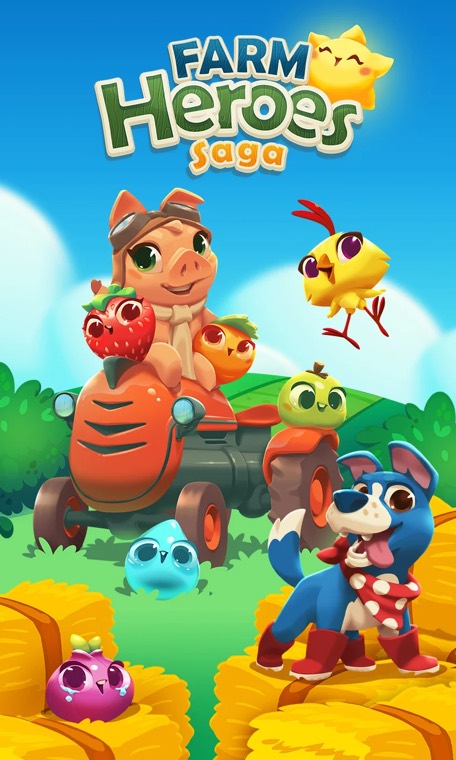
Collect a quota of specific fruit and vegetables rather than chasing a score. Matching four or more grows the pieces, which changes what a 'good move' means entirely.
Four of the biggest casual match-3 games on Android, played properly and written up honestly: how each board actually works, what every power-up does, which tips survive contact with a real level, and where each game starts asking for your patience. Every guide links straight to the official Play Store listing.
Each guide covers the rules, the power-up set, the objective types that need a different approach, the tips that measurably helped, the honest drawbacks, and a direct download link.
Collect a quota of specific fruit and vegetables rather than chasing a score. Matching four or more grows the pieces, which changes what a 'good move' means entirely.
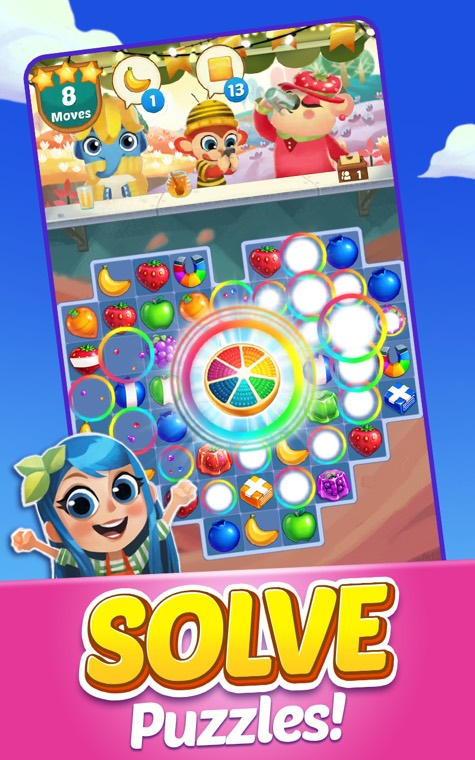
Swap fruit to fill the orders shown at the top of the screen. Smaller and less demanding than the giants, and much lighter on the interruptions.
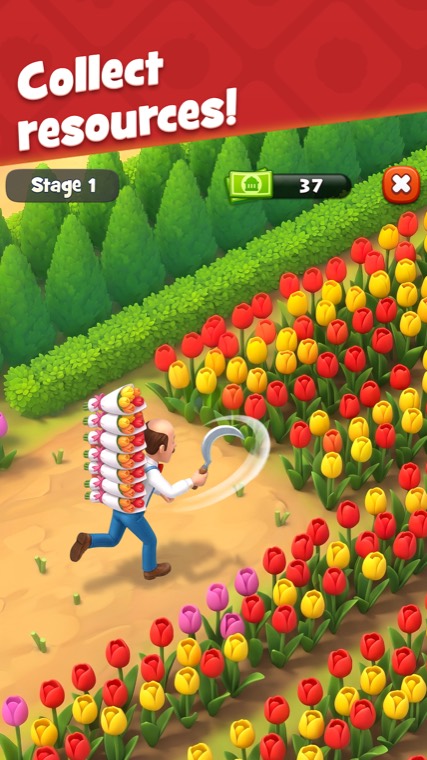
Every level you clear earns a star, and stars restore a neglected estate one flowerbed at a time. The best-rated game on this site, and the strongest meta layer.
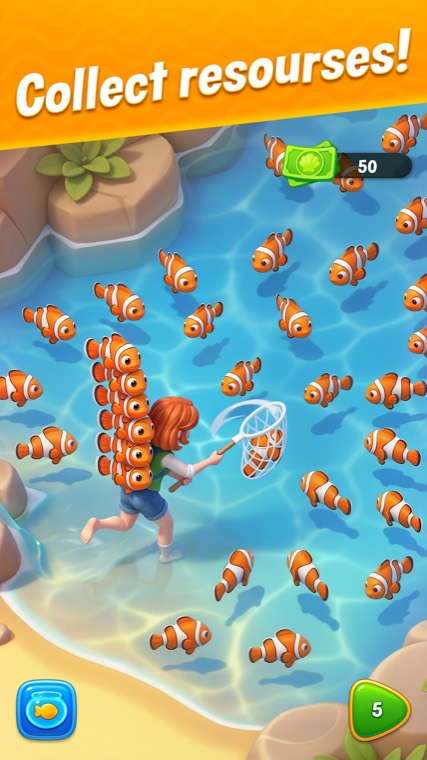
Clear match-3 levels to earn coins, then spend them on fish, plants and decorations. The pace is gentler than anything else on this list.
| Game | Type | Play Store rating | Installs | What makes it different | Download |
|---|---|---|---|---|---|
Farm Heroes SagaKing |
Match-3 collection puzzle | 4.4 ★ 9.83M reviews |
100M+ | Collect quotas, not points | Download freeGoogle Play |
Juice JamJam City |
Match-3 order-filling puzzle | 4.4 ★ 362K reviews |
10M+ | Fill customer orders | Download freeGoogle Play |
GardenscapesPlayrix |
Match-3 + garden restoration | 4.6 ★ 13.3M reviews |
500M+ | Restore a whole estate | Download freeGoogle Play |
FishdomPlayrix |
Match-3 + aquarium builder | 4.4 ★ 6.72M reviews |
100M+ | Build an aquarium | Download freeGoogle Play |
Ratings and install counts as displayed on Google Play (New Zealand store) at the time of writing. Figures change — the linked listing is the current source.
I have spent most of my working life on casual puzzle games, first designing levels for other people's grids and later doing the balancing spreadsheets nobody wants to inherit. That background is the only reason this site exists: after enough years you stop seeing colourful fruit and start seeing the three or four decisions the designer made, and those decisions are what determine whether a game is worth your evening.
This piece is the general theory. The four guides linked above apply it to specific games. Everything here is about free casual entertainment apps on Google Play — games you play for stars and progress, never for money.
The most consequential design decision in a match-3 is not the art or the grid size. It is what the level counts. Three of the four games on this site count different things, and it changes how you should play each one completely.
Farm Heroes Saga counts quantities of specific items. You are not chasing a score; you are filling a shopping list — twelve apples, ten carrots, eight onions. That means the biggest available match is frequently the wrong move, because it is made of something you do not need. Juice Jam counts customer orders, which works similarly but with a smaller list. Gardenscapes and Fishdom count level completions, converting them into stars and coins to spend on a renovation.
The practical rule that falls out of this is short: read what the level is counting before you touch the board. It is the single most common cause of a wasted attempt, and it costs nothing to fix.
Farm Heroes deserves a paragraph of its own, because it does something none of the others do. Matching four or more pieces does not just clear them — it grows the survivors, raising the number printed on them so that each subsequent collection is worth more. A grown apple counts as two or three towards your quota.
This inverts the usual advice. In most match-3 games you clear as much as possible. In Farm Heroes you often want to make a large match specifically to grow neighbouring pieces, and then collect them afterwards. Players who arrive from Candy Crush habitually under-perform for the first fifty levels because they are optimising for the wrong thing.
The test that works in every one of these games. Play twenty levels quickly, then twenty slowly and deliberately. If your clear rate does not move, either you have not found the game's real decision yet — or there isn't one, and it is time to uninstall.
Every game here builds special pieces out of larger matches. The names differ — firecracker, bomb, dynamite, rainbow blast, lightning ball — but the pattern is identical: four in a line gives a directional clear, an L or square gives an area blast, five in a line gives a colour wipe.
What separates a well-designed game is what happens when two of them are swapped together. In Gardenscapes and Fishdom the combinations are large, obvious and consistent, which means the correct play is also the spectacular play. That alignment is worth more to a casual game than any amount of art budget, because it teaches you the rules by rewarding you rather than by explaining.
The universal advice: never spend a special piece on its own if you can pair it. Two combined almost always clear more than the same two used a few moves apart.
Pieces fall downward. This one fact generates most of the reliable tactical advice in the genre. A match made near the bottom of the board rearranges every row above it, and each of those rows might form a new match on its own. A match made in the top row disturbs almost nothing.
If you take a single habit away from this article, make it this: scan the bottom two rows first. When two candidate moves look equally good, take the lower one. Over a hundred levels the difference is substantial and it costs no extra thought.
All four games give you five lives, take one for a failure, and refill them over roughly half an hour. That is the genre standard and it is fine. What varies — and what the guides on this site actually judge — is what a game does at the moment you fail.
The gentle version offers you a modest booster and lets you try again. The commercial version puts a timer on a purchase offer and makes waiting feel like a punishment. Playrix's two games are noticeably calmer about this than the genre average; King's are more insistent, particularly around chapter boundaries where levels are deliberately built as walls.
None of it is dishonest — the games are free, the purchases are optional, and every one of these levels is beatable without paying. But knowing where a game will start pushing lets you decide in advance how you want to respond, and that is worth more than any tactical tip.
A pure ladder of levels gets monotonous around level 150 in every game ever made. The two Playrix titles solve this by attaching the puzzle to something visible: a garden that regrows, an aquarium that fills up. Finishing a level produces a change you can look at, and that turns out to be a far stronger motivator than a number.
Farm Heroes and Juice Jam are closer to pure ladders, with lighter meta layers. Whether that is a drawback depends entirely on you — some players find the renovation meta a distraction from the puzzle, and they are not wrong either.
Ivory Cinder is a guide blog. Everything you can read here is free. The only thing sold is a PDF guide per game — plain written documents, ordered through a request form and emailed to the buyer, with no payment processed anywhere on this website. There is no game hosted here, no gambling, betting or play-for-money functionality of any kind, no deposits and no prizes. Every application discussed is a free casual entertainment puzzle distributed by its publisher on Google Play, and all names and screenshots belong to their respective owners.
No. Ivory Cinder is a written guide site — there is no playable game here. Each guide links to the official Google Play listing, and you install the game from there.
All four are free to install and can be played through without spending anything. Each contains optional in-app purchases, which we flag in every guide.
No. There are no affiliate links, no sponsored posts and no paid placements anywhere on this site. The Google Play buttons are plain store links.
They are the official screenshots each developer publishes on their own Google Play listing, reproduced here for review and identification. All rights remain with the respective publishers.
No. These are casual entertainment puzzles with no wagering and no cash prizes, and this site offers nothing of the kind either.
Transparency statement. Ivory Cinder is an independent guide site operated by Noah Williams, New Zealand — [email protected]. We are not affiliated with Google LLC or with any publisher named here, we receive no payment or commission from them, and we operate no game. Every game covered is a free casual puzzle app on Google Play with optional in-app purchases and no cash prizes. This site is not a casino and offers no gambling, betting or play-for-money activity of any kind.